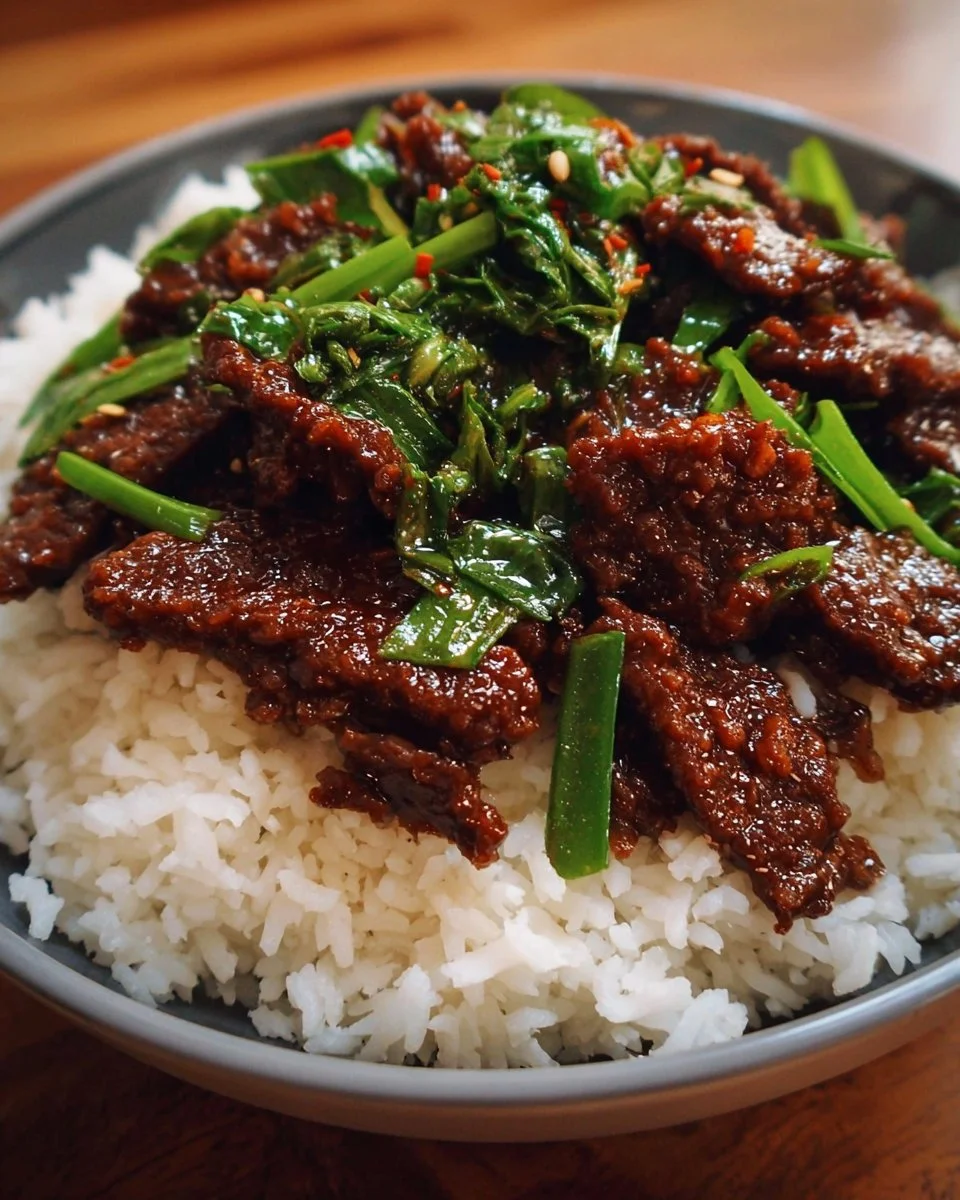
If there’s one dish that makes me swoon the minute it hits the table, it’s this comforting Mongolian Beef—sweet, savory, glossy, and somehow both homey and a little bit indulgent. I love how the edges of the beef caramelize and the sauce clings like a warm blanket. If you ever want to turn a weeknight into a feast, this is the one I reach for (and if you’re already planning a comfort-food lineup, don’t forget my favorite party slider recipe for another cozy night: baked beef and cheese sliders).
Personal Anecdote
The first time I made Mongolian Beef, it was snowing hard outside and our power flickered—perfectly dramatic weather for a dramatic, sticky-sweet dinner. I sliced the steak thin, not trusting my knife skills, and ended up chatting with my neighbor through the window as the kitchen filled with garlic and ginger steam. When I finally plated it over hot rice and took that first bite, my hands were messy, my cheeks were warm, and it felt like the world paused for a delicious second. That dinner turned into a ritual; every rainy night after that, this dish came out and made everything feel a little safer.
Expressing the Joy
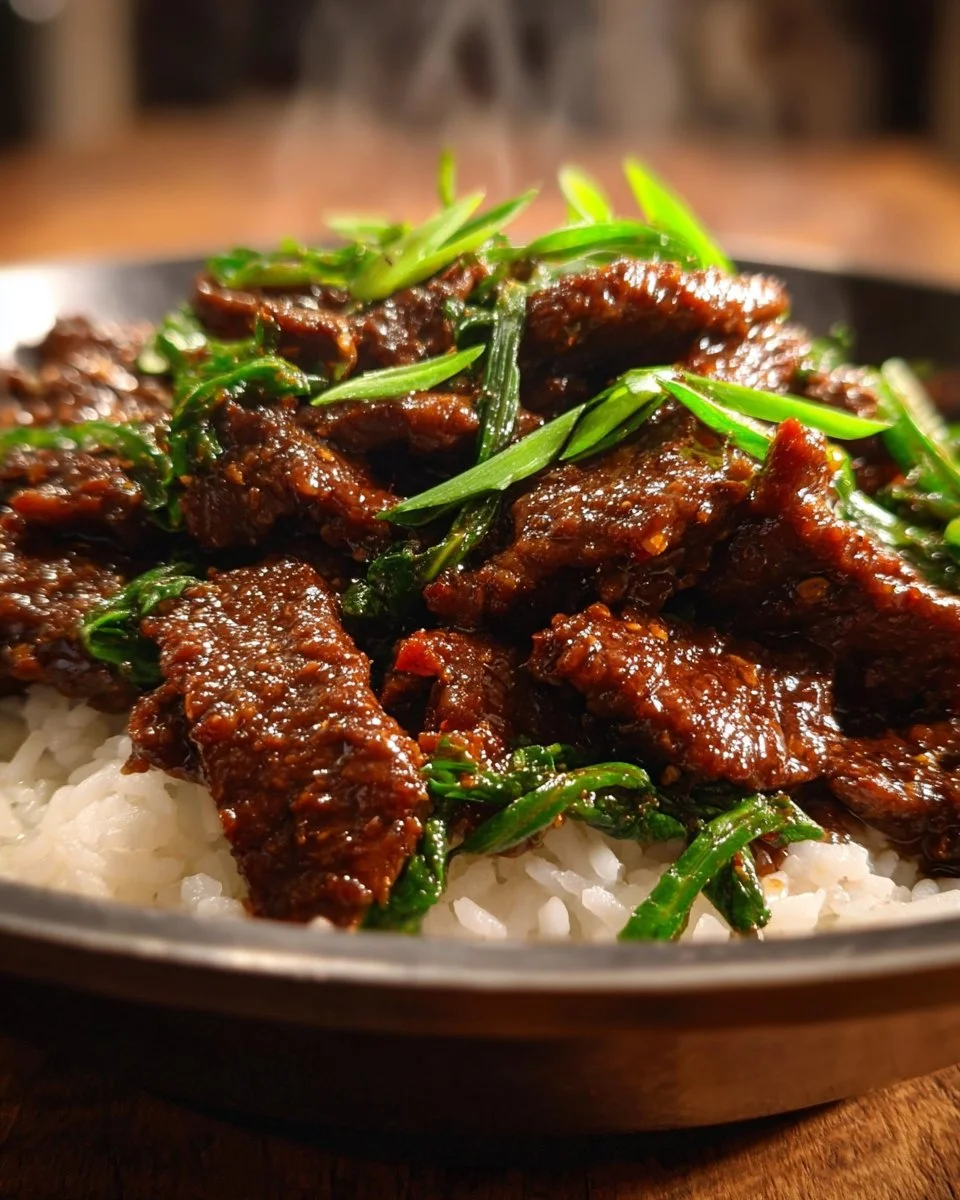
Every bite is a balance: the crackle of browned edges, the silk of sauce, the bright pop of scallion greens. The aroma of soy, brown sugar, garlic, and ginger hits you like a friendly nudge. It’s the kind of dish that makes people talk slower, reach for second helpings, and compliment without blinking—simple pleasures, amplified. I get excited just thinking about lifting that lid and seeing the sauce glisten. Trust me, your kitchen will smell like a restaurant that cares deeply about its comfort menu!
Ingredients Comforting Mongolian Beef
- 1 1/2 pounds (680 g) flank steak, thinly sliced against the grain (freeze 20–30 minutes first for easier slicing)
- 1/4 cup (30 g) cornstarch (for dredging; helps create that glossy crust)
- 2–3 tablespoons vegetable oil (for frying; use neutral oil with a high smoke point)
- 4 cloves garlic, minced (aromatic and necessary—don’t skimp!)
- 1 tablespoon fresh ginger, minced (adds warmth and brightness)
- 1/2 cup (120 ml) low-sodium soy sauce (or tamari for gluten-free)
- 1/2 cup (120 ml) water
- 2/3 cup (140 g) packed dark brown sugar (gives the signature molasses-like depth)
- 1 tablespoon rice vinegar (optional, brightens the sauce)
- 1 tablespoon sesame oil (for finishing; a little goes a long way)
- 1/4 teaspoon black pepper (freshly ground if you can)
- 1/4–1/2 teaspoon red pepper flakes (optional, if you like a gentle heat)
- 3 green onions (scallions), whites and greens separated, thinly sliced
- 1 tablespoon cornstarch mixed with 2 tablespoons cold water (slurry to thicken if needed)
- Sesame seeds, for garnish (optional, but so pretty)
- Cooked jasmine or steamed rice, for serving (I love jasmine for its perfume)
(Small notes: If you prefer less sweetness, start with 1/2 cup brown sugar and taste. For a leaner cut, sirloin works fine; just don’t overcook.)
How to Prepare Comforting Mongolian Beef
Preheat & Prepare the Base
- Pat the flank steak dry and slice it thinly across the grain (thin slices = tender bites). Tip: freeze for 20–30 minutes beforehand to make slicing uniform and safe.
- Toss the slices in 1/4 cup cornstarch until each piece is evenly coated; shake off excess.
- Heat a large skillet or wok over medium-high heat until it’s very hot (a drop of water should skitter). Add 2 tablespoons vegetable oil and swirl.
- Working in batches (don’t overcrowd!), sear the beef slices until edges are browned and crisp, about 1–2 minutes per side. The goal is golden-browned caramelization; keep an eye so they don’t go dry. Transfer cooked beef to a plate and set aside. (Warning: if the pan isn’t hot enough you’ll steam the meat instead of searing—high heat is your friend here!)
Make the Main Filling
- In the same skillet, lower heat to medium and add a tiny splash of oil if the pan is dry. Add the minced garlic, ginger, and the whites of the scallions. Sauté briefly—about 30–45 seconds—until fragrant (don’t let the garlic burn).
- Pour in the soy sauce, water, and brown sugar. Stir and bring to a simmer so the sugar dissolves. Add rice vinegar if using, and taste—this is where you balance sweet and salty.
- If you want a silkier, thicker sauce, stir the cornstarch slurry and pour it in a little at a time, simmering until the sauce coats the back of a spoon. Finish with sesame oil, black pepper, and red pepper flakes if desired.
Assemble and Chill/Bake
- Return the seared beef to the skillet and toss quickly to coat every piece in the glossy sauce. Let it bubble together for 30–60 seconds so the flavors marry.
- Remove from heat and sprinkle with the green parts of the scallions and sesame seeds.
- Serve immediately over steaming rice, or keep warm for up to 15 minutes before serving. (This recipe doesn’t need to chill or bake—it’s best hot, fresh, and saucy!)

Why You’ll Love This Recipe
- It’s faster than most “restaurant-style” dinners but tastes just as indulgent.
- Balanced sweet-and-salty flavor that satisfies comfort-food cravings.
- The texture contrast—crisped edges with silky sauce—is irresistible.
- Super versatile: serve it over rice, noodles, or even cauliflower rice for a lighter option.
- Crowd-pleasing and great for weeknights or casual dinner parties.
- Easy to scale up for extra mouths or to make extra for lunches.
- Can be adapted to gluten-free or vegetarian diets with simple swaps.
- Leftovers reheat beautifully for an easy next-day meal.
Tips for Success
- Slice against the grain for tender beef bites; take the extra minute to freeze slightly for cleaner slices.
- Don’t overcrowd the pan when searing—batch cooking gives you a true caramelized crust.
- Use dark brown sugar for depth; light brown sugar will work in a pinch but will be brighter.
- Taste as you go—sauces change as they reduce; you may want a splash more soy or vinegar depending on your sugar.
- If your sauce gets too thick after resting, thin with a tablespoon of warm water as you reheat.
- For gluten-free: swap soy sauce for tamari and ensure sugar and other sauces are certified gluten-free.
- Vegetarian option: use extra-firm tofu, pressed, dredged, and pan-fried; or seitan for a chewier texture.
- Keep garlic from burning—burnt garlic becomes bitter and will ruin the sauce.
Nutritional Information (Estimated per serving — serves 4)
- Calories: ~560 kcal
- Protein: ~38 g
- Fat: ~20 g
- Saturated Fat: ~6 g
- Carbohydrates: ~55 g
- Sugars: ~26 g
- Fiber: ~1 g
- Sodium: ~950 mg (These are estimates and will vary based on exact ingredients, rice portion, and any swaps you make.)
FAQ Comforting Mongolian Beef
Q: Can I use a different cut of beef? A: Yes—sirloin, skirt steak, or hanger can all work. Flank is popular because it’s lean and flavors soak in well. Slice thin and against the grain for tenderness.
Q: How can I make it less sweet? A: Reduce brown sugar to 1/2 cup or add an extra splash of soy sauce or rice vinegar to bring more savory balance. Taste as you simmer.
Q: What if my sauce won’t thicken? A: Stir the cornstarch slurry (1 tbsp cornstarch + 2 tbsp water) to recombine and add a little at a time over simmering sauce; it should thicken quickly. If you add too much, thin with water.
Q: Can I make this ahead and reheat? A: Yes—cook entirely, cool quickly, and store in the fridge. Reheat gently in a skillet with a splash of water and a quick toss to rehydrate the sauce. Avoid overcooking the beef on reheating.
Q: Is there an easy vegetarian alternative? A: Pressed tofu works beautifully—coat in cornstarch, pan-fry until crisp, and toss in the same sauce. Seitan gives a chewier, more “meaty” bite.
Storage Instructions
- Refrigerator: Store leftovers in an airtight container for 3–4 days. Keep rice separate if possible to avoid sogginess.
- Freezer: You can freeze cooked beef and sauce together for up to 2 months in a freezer-safe container. Thaw overnight in the fridge before reheating.
- Reheating: Best re-heated gently in a skillet over medium heat with a splash of water or broth, stirring until warmed through. Microwaving works in a pinch—stir halfway to re-distribute the sauce. (Do not reheat more than once—reheat only the portion you plan to eat.)
Serving Suggestions
- Serve over steamed jasmine rice or a bed of garlic fried rice for extra comfort.
- For greens: bright blanched broccoli, bok choy, or snap peas add color and crunch.
- Add a splash of toasted sesame oil and extra scallions right before serving for a perfume of flavor.
- For a fun street-food vibe, spoon the beef into buttered buns for a sticky-sweet sandwich.
- Pair with cool, crisp cucumber pickles or a quick slaw to cut through the richness.
- Drinks: a chilled Riesling or a light lager complements the sweet-salty profile beautifully; for a non-alcoholic option, try jasmine tea or a citrusy iced tea.
- Fancy touch: finish with microgreens or thinly sliced red chili for color and a little heat. (And if you want another cozy side idea that’s full of comfort, try this soulful black beans and rice comfort recipe—it’s a lovely partner to the beef.)
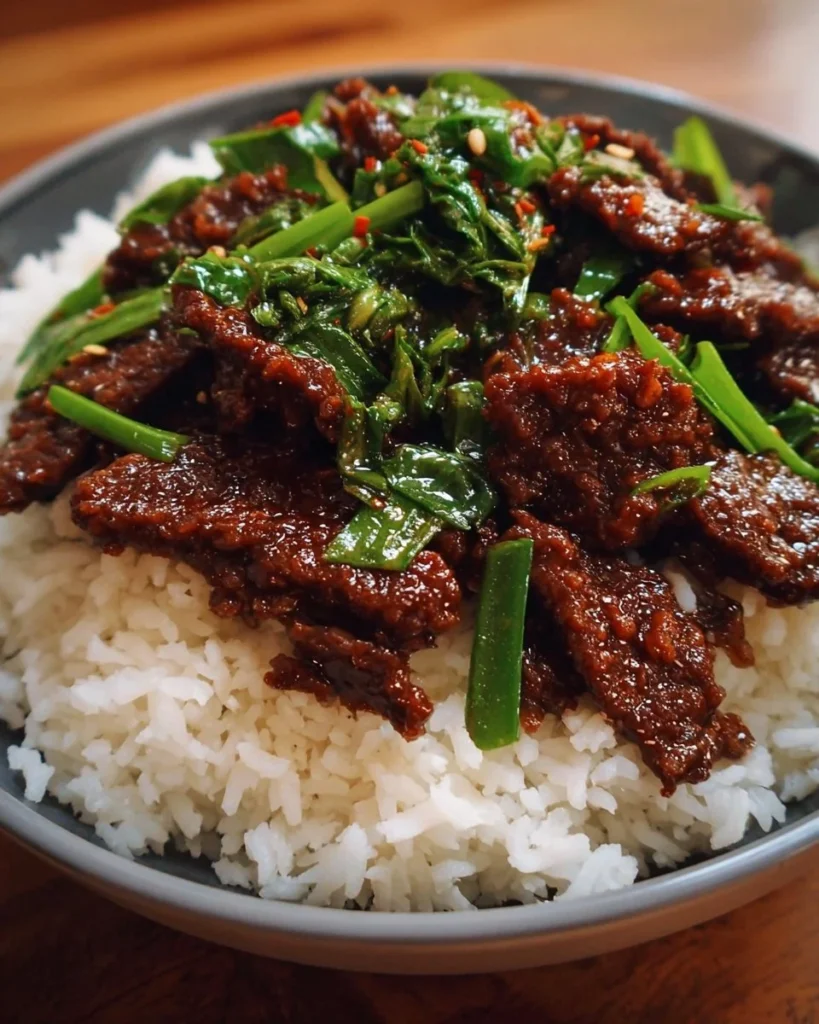
Mongolian Beef
Ingredients
Method
- Pat the flank steak dry and slice it thinly across the grain.
- Toss the slices in 1/4 cup cornstarch until each piece is evenly coated; shake off excess.
- Heat a large skillet or wok over medium-high heat until it’s very hot.
- Add 2 tablespoons vegetable oil and swirl.
- Working in batches, sear the beef slices until edges are browned and crisp, about 1–2 minutes per side.
- Transfer cooked beef to a plate and set aside.
- In the same skillet, lower heat to medium and add a tiny splash of oil if the pan is dry.
- Add the minced garlic, ginger, and the whites of the scallions. Sauté briefly until fragrant.
- Pour in the soy sauce, water, and brown sugar. Stir and bring to a simmer.
- Add rice vinegar if using, and taste.
- If a silkier, thicker sauce is desired, stir in the cornstarch slurry gradually until it coats the back of a spoon.
- Finish with sesame oil, black pepper, and red pepper flakes if desired.
- Return the seared beef to the skillet and toss to coat in the sauce.
- Let it bubble together for 30–60 seconds.
- Remove from heat and sprinkle with the green parts of the scallions and sesame seeds.
- Serve immediately over steaming rice.