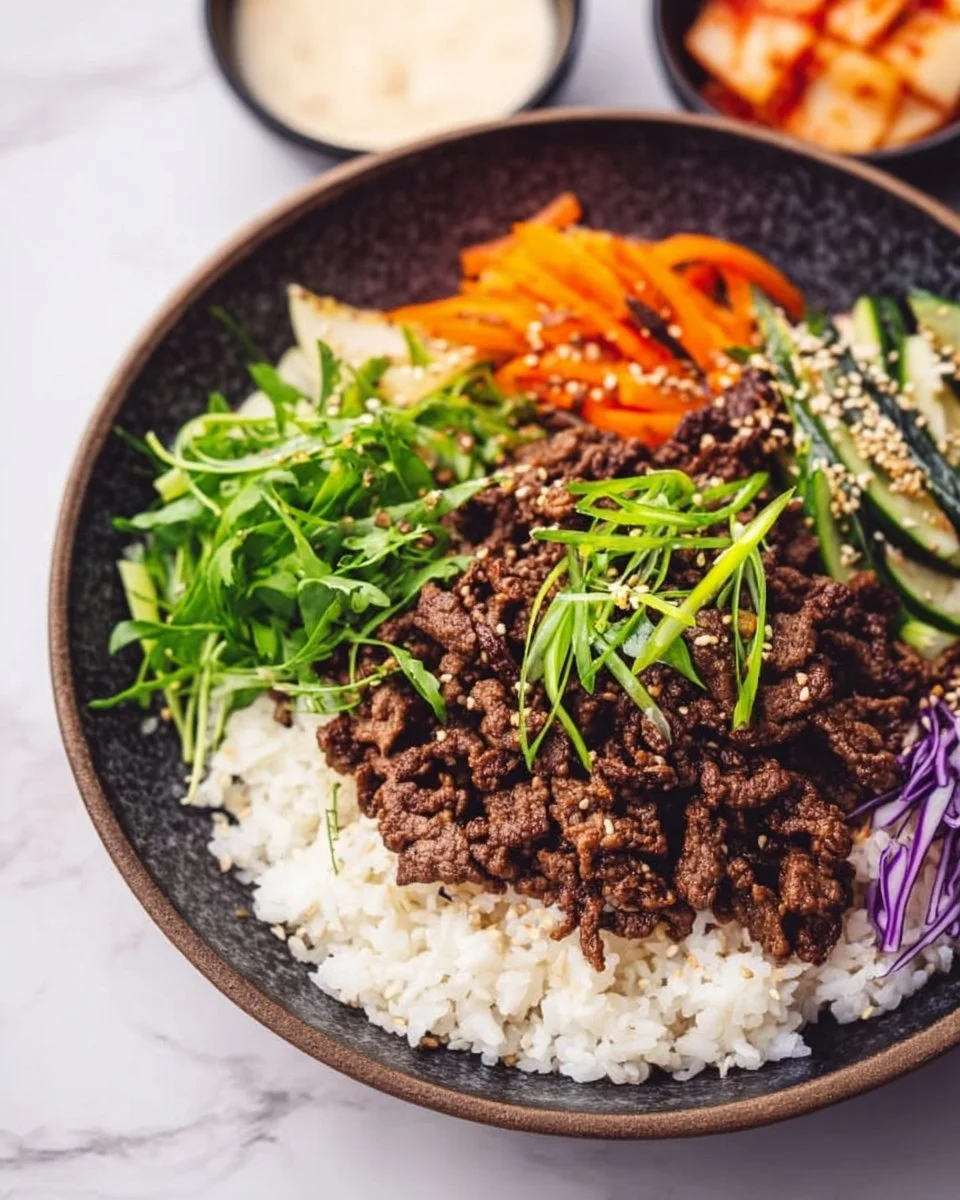
I still remember the first time I made this Korean Beef Bowl — the whole apartment smelled like caramelized garlic and toasted sesame, and I felt like I had unlocked some tiny, delicious secret. It’s one of those recipes that feels like a hug in a bowl: sweet, savory, a little spicy, and impossibly comforting. If you want dinner that arrives fast, tastes like you spent hours, and makes everyone at the table smile with the first spoonful, this is it. If you enjoy quick, cozy beef dishes, you might also enjoy baked beef and cheese sliders for another fuss-free crowd-pleaser.
The first time I cooked this for friends, I had only meant to make a “practice” batch. One friend arrived early and immediately perched at the counter, inhaling and asking for seconds before we’d even set the table. We ended up eating standing around the stove, passing bowls back and forth, laughing about old stories. That night the music was low, the kitchen lights warm, and the simple, glossy beef over rice felt like a tiny celebration — the kind of food that turns ordinary evenings into memories.
Why this Korean Beef Bowl feels special
This bowl hits so many beautiful notes: the sticky-sweet glaze that clings to each bite of beef, the bright pop of scallions, the toasted sesame nuttiness, and the gentle heat that wakes up your taste buds. The textures — tender beef, snappy veggies, fluffy rice — are a lovely, comforting contrast. It’s quick enough for weeknights but flavorful enough for guests, and it’s endlessly adaptable. Every time I make it, someone asks for the recipe.
Ingredients Korean Beef Bowl
- 1 lb (450 g) ground beef (80/20 is my go-to for flavor; leaner is fine if you drain excess fat)
- 3 cups cooked short-grain rice, hot (about 1 1/4 cups uncooked rice)
- 2 tablespoons vegetable oil (or neutral oil like canola)
- 4 cloves garlic, minced (the more, the merrier — I use 5!)
- 1 tablespoon fresh ginger, grated (adds brightness)
- 1/4 cup low-sodium soy sauce (or regular if you like saltier)
- 2 tablespoons brown sugar, packed (for that caramelized depth)
- 1 tablespoon gochujang (Korean chili paste) or 1 teaspoon red pepper flakes (adjust for heat)
- 2 tablespoons rice vinegar (or apple cider vinegar in a pinch)
- 1 tablespoon sesame oil (to finish; do not cook at high heat)
- 1/4 cup water or low-sodium beef broth (to loosen the sauce)
- 3 green onions, thinly sliced (white and green parts separated)
- 1 carrot, julienned or thinly sliced (for crunch and color)
- 1 cup kimchi, chopped (optional, but adds tang and funk)
- 1 tablespoon sesame seeds, toasted (for garnish)
- 1 small cucumber, thinly sliced (optional, for freshness)
- 2 soft-boiled or fried eggs (optional, per bowl — an absolute crowning touch!)
- Salt and black pepper to taste (season rice or veggies lightly)
(Side notes: I always keep extra gochujang in the fridge — it’s a flavor lifesaver. If you don’t have short-grain rice, jasmine works fine but texture differs slightly.)
How to Prepare Korean Beef Bowl
Preheat & Prepare the Base
- If using a skillet, warm 1 tablespoon vegetable oil over medium-high heat. (Don’t burn it — oil should shimmer, not smoke.)
- Cook rice according to package instructions so it’s ready and hot when the beef is finished. Fluff with a fork and keep covered.
- Prep your toppings: slice the scallions, julienne the carrot, toast sesame seeds in a dry pan for 1–2 minutes until fragrant, and soft-boil eggs if using (6–7 minutes for jammy yolks, then shock in ice water).
Make the Main Filling (the beef)
- Heat the remaining 1 tablespoon oil in a large skillet over medium-high heat. Add the minced garlic and grated ginger; sauté 30–45 seconds until fragrant (you’ll smell it — instant comfort!).
- Add the ground beef, breaking it up with a spatula. Cook until mostly browned, about 5–7 minutes. Season lightly with salt and pepper.
- In a small bowl, whisk together soy sauce, brown sugar, gochujang, rice vinegar, sesame oil, and water (this becomes your glossy sauce).
- Pour the sauce over the beef. Reduce heat to medium and stir, scraping up any browned bits from the pan. Let the mixture simmer and thicken for 2–4 minutes until the sauce clings to the meat. Taste and adjust: add a pinch of sugar if you want sweeter, a splash more vinegar for brightness, or a dash of soy for saltiness.
- Stir in sliced white parts of scallions and chopped kimchi (if using) to warm through — they add incredible depth.
Assemble and Serve
- Scoop hot rice into bowls.
- Spoon a generous portion of the glossy Korean beef over the rice.
- Add carrot, cucumber, and green scallion slices for freshness and crunch.
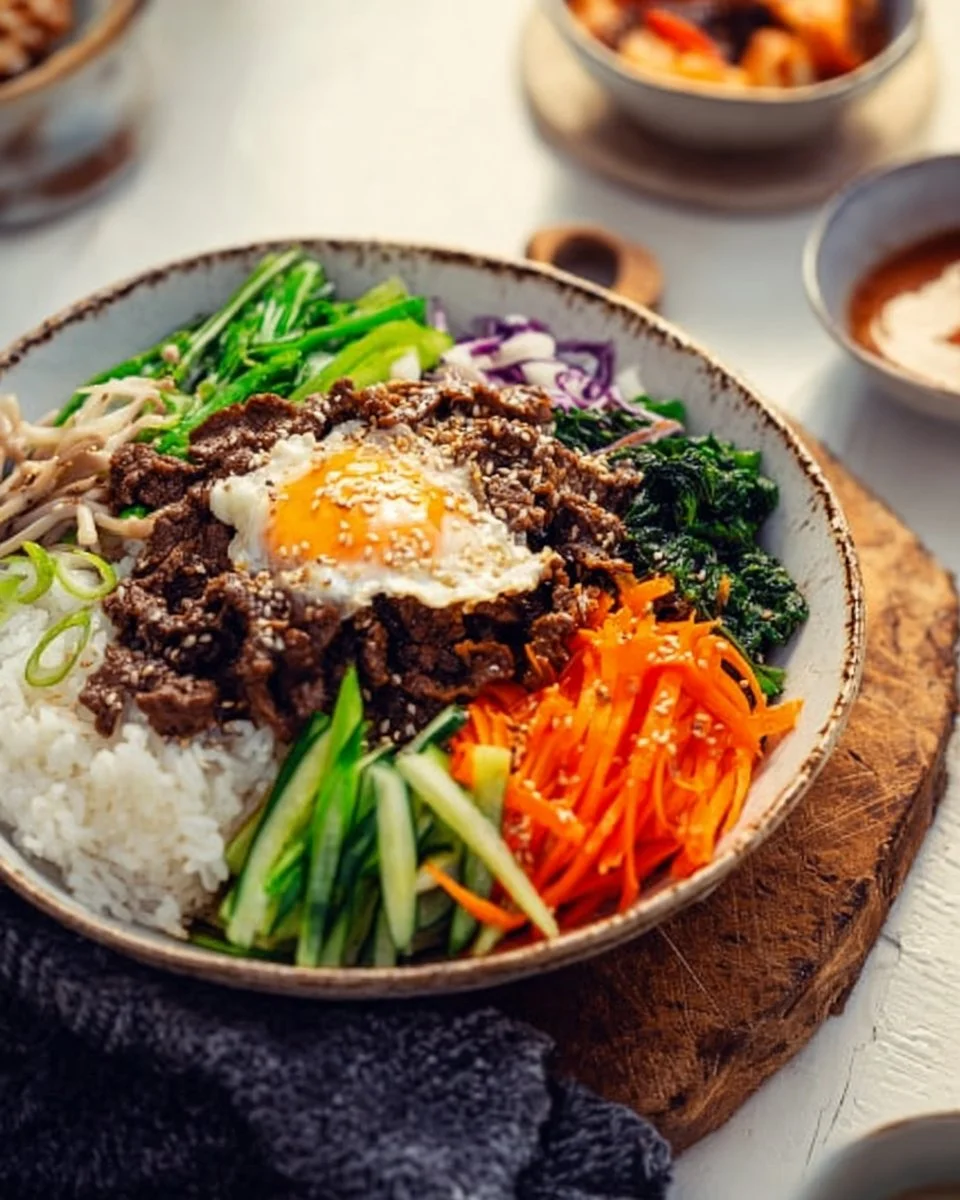
- Top with a soft-boiled or fried egg if you like; break the yolk so it melds into the beef-sauce like a creamy dressing.
- Sprinkle with toasted sesame seeds and an extra drizzle of sesame oil or a few drops of sriracha for heat.
- Serve immediately and watch everyone dive in!
(Tip: If your beef gets too sticky, add a splash of water or broth and finish with the heat on low — patience makes a silky sauce. Warning: gochujang is flavorful — start small and add more; you can always dial it up.)
Why You’ll Love This Recipe
- Fast: Ready in about 20–30 minutes from start to finish — perfect for busy nights.
- Packed with flavor: Sweet, salty, umami, and spicy notes harmonize beautifully.
- Texturally satisfying: Tender beef, pillowy rice, crisp veggies, creamy egg.
- Versatile: Serve over rice, noodles, lettuce wraps, or even cauliflower rice.
- Crowd-pleasing: Familiar beef flavors with an exciting Korean twist — great for family dinners.
- Easy to scale: Double or triple for meal prep or feeding a group.
- Customizable heat: Control spiciness with gochujang or red pepper flakes.
- Budget-friendly: Ground beef keeps costs low while delivering big taste.
Tips for Success
- Use good-quality soy sauce and fresh garlic/ginger — they make a huge flavor difference.
- Don’t overcrowd the pan when browning beef; cook in batches if needed so it can caramelize.
- Taste as you go: the sauce should be balanced — sweet, salty, and tangy. Adjust with small increments.
- If you want a cleaner look, drain excess fat after browning but reserve a tablespoon for flavor.
- Toast sesame seeds and scallions just before serving for the best aroma.
- If using eggs, time them so they’re warm when serving — soft yolks add luxuriousness.
- For a vegetarian version, substitute lentils or crumbled tofu and use mushroom broth for umami.
- Make it ahead: cook the beef and store the sauce separately; reheat gently with a splash of water.
Nutritional Information (estimated per serving)
- Calories: ~520 kcal
- Protein: ~30 g
- Carbohydrates: ~55 g
- Fat: ~20 g
- Saturated Fat: ~7 g
- Fiber: ~3 g
- Sugar: ~10 g
- Sodium: ~850 mg (varies with soy sauce)
FAQ Korean Beef Bowl
Q: Can I use ground turkey or chicken instead of beef? A: Absolutely — ground turkey or chicken work fine. They’re leaner, so I recommend adding a touch of oil or a splash of broth while cooking to keep it juicy.
Q: How spicy is this recipe? A: Mild to medium by default. Gochujang adds warmth and depth more than pure heat — start with 1 tablespoon and add more if you want it hotter. Red pepper flakes increase heat quickly.
Q: What if I don’t have gochujang? A: Mix a bit of miso with chili paste or use a combination of chili paste and a touch more brown sugar for similar depth. Gochujang has a unique fermented sweetness, but substitutes can still be delicious.
Q: Can I make this ahead for meal prep? A: Yes — store beef and rice separately in airtight containers. Reheat the beef gently in a skillet with a splash of water to loosen the sauce; microwave rice covered for 60–90 seconds with a damp paper towel to restore moisture.
Q: What equipment do I absolutely need? A: A good nonstick or heavy skillet and a rice cooker or pot for rice. A fine grater for ginger and a sharp knife make prep easier, but nothing fancy required.
Storage Instructions
- Refrigerate: Store leftover beef in an airtight container for up to 3–4 days. Keep rice in a separate container to prevent it from absorbing too much sauce and becoming mushy.
- Reheating: Warm beef gently in a skillet over medium-low heat with a splash of water or broth; stir until heated through. Reheat rice covered in the microwave or steam briefly on the stovetop. If you have a soft-boiled egg, add a freshly cooked egg when serving.
- Freezing: You can freeze the cooked beef (without rice) for up to 2 months. Thaw overnight in the fridge and reheat gently.
Serving Suggestions
- Classic bowl: Hot rice, beef, pickled kimchi, carrots, cucumber, scallions, sesame seeds, and a soft egg — pure comfort.
- Lettuce wraps: Spoon warm beef into butter lettuce leaves with quick-pickled carrots for a lighter, crunchy bite.
- Noodle bowl: Serve the beef over udon or soba noodles with a handful of spinach or bok choy for a heartier twist.
- Fancy touch: Finish with a few threads of toasted nori, a drizzle of chili oil, or microgreens for color.
- Drinks: Pair with iced green tea, a dry sparkling sake, or a light lager to cut through the richness.
- For guests: Set up a toppings bar — kimchi, pickles, extra scallions, sesame seeds, chili paste, and lime wedges — so everyone can customize their bowl.
Korean Beef Bowl
Ingredients
Method
- Warm 1 tablespoon vegetable oil over medium-high heat in a skillet.
- Cook rice according to package instructions so it's ready and hot when the beef is finished.
- Prep toppings: slice scallions, julienne carrot, toast sesame seeds in a dry pan for 1–2 minutes, and soft-boil eggs if using.
- Heat remaining tablespoon oil in a large skillet over medium-high heat. Add minced garlic and grated ginger; sauté for 30–45 seconds.
- Add ground beef, breaking it up with a spatula. Cook until mostly browned, about 5–7 minutes. Season lightly with salt and pepper.
- In a small bowl, whisk together soy sauce, brown sugar, gochujang, rice vinegar, sesame oil, and water.
- Pour the sauce over the beef. Reduce heat to medium and stir, scraping browned bits from the pan. Let it simmer and thicken for 2-4 minutes.
- Stir in white parts of scallions and chopped kimchi to warm through.
- Scoop hot rice into bowls.
- Spoon Korean beef over rice.
- Add carrot, cucumber, and green scallions for freshness.
- Top with a soft-boiled or fried egg, breaking the yolk.
- Sprinkle with toasted sesame seeds and drizzle extra sesame oil or sriracha if desired.