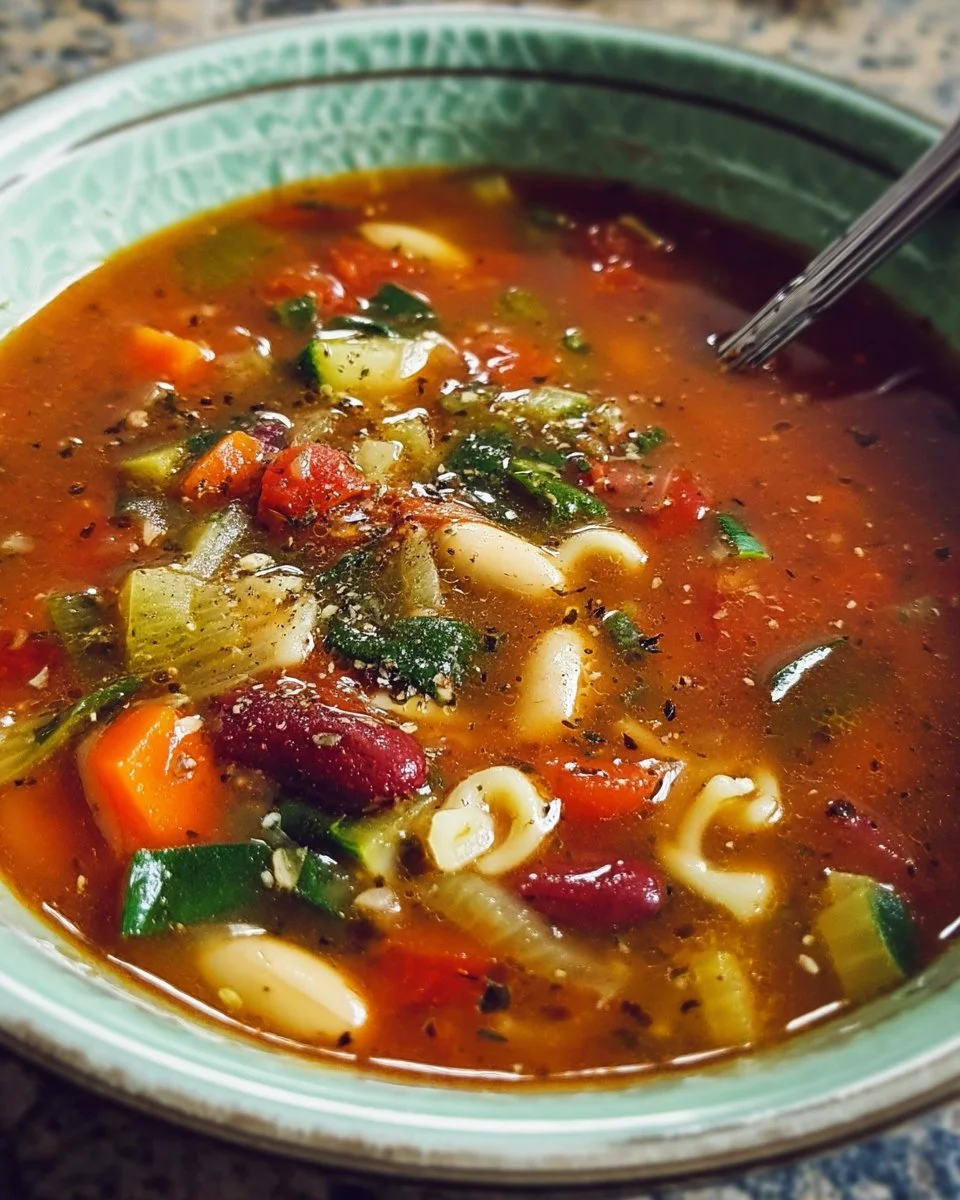
Why This Minestrone Feels Like Home
There’s a smell that instantly makes me slow down, breathe deep, and feel like I’m wrapped in a warm kitchen hug — simmering tomatoes, garlic, rosemary, and a swirl of olive oil lifting the whole room into something cozy and utterly irresistible. That’s the magic of minestrone for me. It’s the kind of soup that makes you want to tuck into the couch with a big bowl and forget about the world for a while. If you love hearty, comforting soups, you might also enjoy this bacon-cheddar gnocchi soup as another cozy option for chilly nights.
A Personal Memory
When I was a kid, Sunday afternoons meant my nonna’s kitchen: a big pot bubbling on the stove, cousins chattering, and the house full of tomato steam. Nonna never measured — just a pinch of this, a handful of that — and the result was something I can still taste in my mind: bright tomato, earthy beans, tender pasta, and vegetables that still had a bit of snap. Years later, I learned to replicate her rhythm — sauté, simmer, smell, taste — and this version is my loving attempt to bottle that Sunday warmth for any day you need it.
Why This Recipe Feels Special
Minestrone is the ultimate feel-good bowl: rustic, colorful, and forgiving. You get soft beans, al dente pasta, and vegetables that sing with a sprinkle of herbs. Every spoonful is layered — a tomato tang, a mellow garlic-to-olive-oil base, the chew of beans, and the gentle pop of carrots and zucchini. It’s simple, but every ingredient plays its part like an ensemble cast. I get excited every time the basil hits the bowl — the aroma lifts up and you just know it’s going to be good. Also, it fills the house with an aroma that practically demands neighbors drop by (seriously, be ready to share!).
Ingredients Minestrone Soup
- 2 tablespoons extra-virgin olive oil (good oil really matters here)
- 1 medium yellow onion, finely diced (about 1 cup)
- 2 cloves garlic, minced (add more if you’re garlic-happy)
- 2 medium carrots, diced (for sweetness and color)
- 2 celery stalks, diced (classic aromatics)
- 1 medium zucchini, diced (keeps things bright and tender)
- 1 medium potato, peeled and diced (optional — adds silkiness)
- 1 (28 oz) can crushed tomatoes (or 4 ripe tomatoes, chopped)
- 6 cups low-sodium vegetable or chicken broth (adjust for thickness)
- 1 (15 oz) can cannellini beans, drained and rinsed (or 1½ cups cooked beans)
- 1 cup small pasta (ditalini, small shells, or elbow) — cooked separately or added directly
- 1 teaspoon dried oregano
- 1 teaspoon dried thyme (or 1 sprig fresh)
- 1 bay leaf
- Salt and freshly ground black pepper, to taste
- A big handful fresh spinach or kale, roughly chopped (for a green pop)
- 1/4 cup freshly grated Parmesan cheese, plus extra for serving (optional but heavenly)
- 2 tablespoons chopped fresh basil (or parsley) for finishing
- A squeeze of lemon juice or a splash of red wine vinegar (to brighten at the end)
(Side notes: I love using a high-quality broth and good olive oil — they lift every spoonful. If you’re using canned tomatoes, taste them first; some are sweeter than others.)
How to Prepare Minestrone Soup
Preheat & Prepare the Base
- Heat a large heavy-bottomed pot over medium heat and pour in the olive oil. Let the oil warm until it shimmers (don’t let it smoke).
- Add the diced onion and a pinch of salt. Sauté until soft and translucent, about 5–7 minutes. The aroma here is already a little celebration!
- Stir in the garlic, carrots, and celery. Cook 4–5 minutes until the carrots begin to soften and the garlic smells fragrant — resist browning the garlic, you want savory, not bitter.
- Add the diced potato and zucchini, stirring so everything gets a glossy coat of oil and flavor. This is the comfy, savory foundation of your soup.
Make the Main Filling (e.g., mousse)
- Pour in the crushed tomatoes and the broth. Stir in the oregano, thyme, and bay leaf. Bring the pot to a gentle boil, then reduce to a simmer.
- Add the drained cannellini beans and simmer for 15–20 minutes so the flavors marry and the vegetables become tender but still texturally interesting. Taste as you go — add salt and pepper little by little.
- If you’re adding pasta directly, add the pasta in the last 10 minutes of simmering (check package times for al dente). Alternatively, cook pasta separately and add it just before serving to avoid mushy pasta.
Assemble and Chill/Bake
- Remove the bay leaf and stir in the chopped spinach or kale; let it wilt for a couple minutes. Finish with a splash of lemon juice or red wine vinegar to brighten everything.
- Ladle into bowls and grate a generous shower of Parmesan over each serving. Scatter chopped basil on top. Give one big, approving inhale — the aroma should be soulful and herb-kissed.
- Serve hot with crusty bread for dipping. If you’re planning leftovers, keep pasta separate or on the firm side so it doesn’t over-soften later.
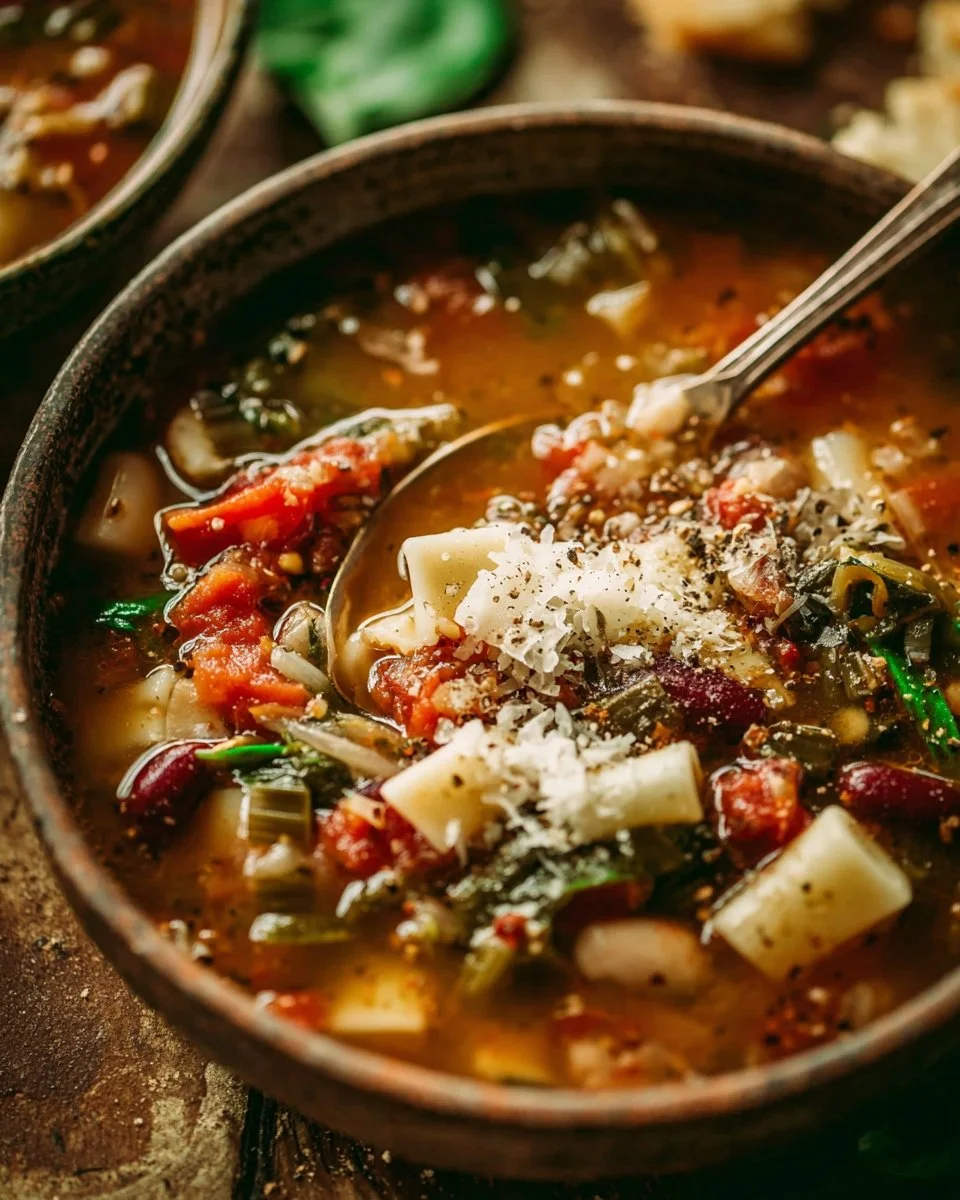
Why You’ll Love This Recipe
- It’s incredibly forgiving — swap vegetables based on season or fridge finds.
- Deep, layered flavor from simple steps (sauté, simmer, finish).
- Comforting texture: creamy beans, tender veg, chewy pasta — a perfect hug in a bowl.
- Economical and pantry-friendly — great for busy weeks.
- Easy to scale up for a crowd or make in advance for weeknight meals.
- Versatile for vegetarian, vegan, or meat-added versions (add shredded chicken or pancetta if you like).
- Freezer-friendly (without pasta) — prep once, enjoy later.
- Fresh herbs and a splash of acid at the end make it sing.
Tips for Success
- Use good-quality broth and olive oil — they’re the unseen heroes.
- Don’t rush the sauté stage; soft onions and vegetables build a sweet, savory backbone.
- If your tomatoes taste a bit flat, add a teaspoon of sugar or a splash of balsamic to round them.
- Cook pasta separately if you expect leftovers; this prevents sogginess.
- For creamier texture, mash a few beans against the pot side to thicken the broth naturally.
- Taste and adjust seasoning gradually — soup develops as it simmers.
- Add delicate greens at the end to keep their color and texture bright.
- If you like more depth, add a Parmesan rind to the pot while simmering (remove before serving).
Nutritional Information (estimated per 1.5–2 cup serving)
- Calories: ~320 kcal
- Protein: 12–14 g
- Carbohydrates: 45–50 g
- Fat: 8–10 g (mostly olive oil)
- Fiber: 9–11 g
- Sugar: 8–10 g (natural from vegetables and tomatoes)
- Sodium: ~550–700 mg (adjust with low-sodium broth and salt)
- Vitamin A and C: High (thanks to carrots, tomatoes, and greens)
(Note: values vary with exact ingredients and portion sizes. This is an estimate.)
FAQ Minestrone Soup
Q: Can I make this gluten-free?
A: Absolutely! Use gluten-free pasta or skip the pasta and add extra beans or rice. The soup stays just as cozy.
Q: Can I make this vegan?
A: Yes — use vegetable broth and omit the Parmesan, or use a vegan parmesan alternative. A splash of nutritional yeast can add a savory umami hit.
Q: What if I only have dried beans?
A: Dried beans are great — soak overnight and simmer until tender, or use a pressure cooker. For speed, canned beans are perfectly fine.
Q: Can I freeze minestrone?
A: Yes, but freeze it without the pasta for best texture. Reheat gently and add freshly cooked pasta when serving.
Q: What pan or pot works best?
A: A large, heavy-bottomed Dutch oven or stockpot is ideal for even heat and a roomy simmer. But any large soup pot will do.
Storage Instructions
Let the soup cool to near room temperature (no more than two hours at room temp). Store in airtight containers:
- Refrigerator: Up to 4–5 days (keep pasta separate if possible).
- Freezer: Up to 3 months (omit pasta before freezing; add when reheating).
Reheat on the stove over low-medium heat, adding a splash of broth or water if it’s too thick. If refrigerated, bring to a gentle simmer until hot through. Avoid rapid reheating in the microwave if you want the best texture — stovetop keeps everything more even and delicious.
Serving Suggestions
- Ladle into deep bowls and serve with thick slices of toasted sourdough rubbed with garlic and drizzled with olive oil.
- Top with a spoonful of pesto or a sprinkle of red pepper flakes for a flavor boost.
- Offer lemon wedges for guests to squeeze on top for a bright pop.
- Pair with crusty bread, a simple green salad with lemon vinaigrette, or a cheese plate for a heartier meal.
- For a fancier finish, drizzle high-quality extra-virgin olive oil and shave aged Parmesan over the top.
- Drink pairings: a light-bodied red like Chianti, a crisp Sauvignon Blanc, or a warm herbal tea for pure coziness.
I hope this recipe brings you the same comfort it brings me — a simple pot of warmth that somehow tastes like home. Dig in, savor the aroma, and don’t be surprised if you find yourself making it every week!
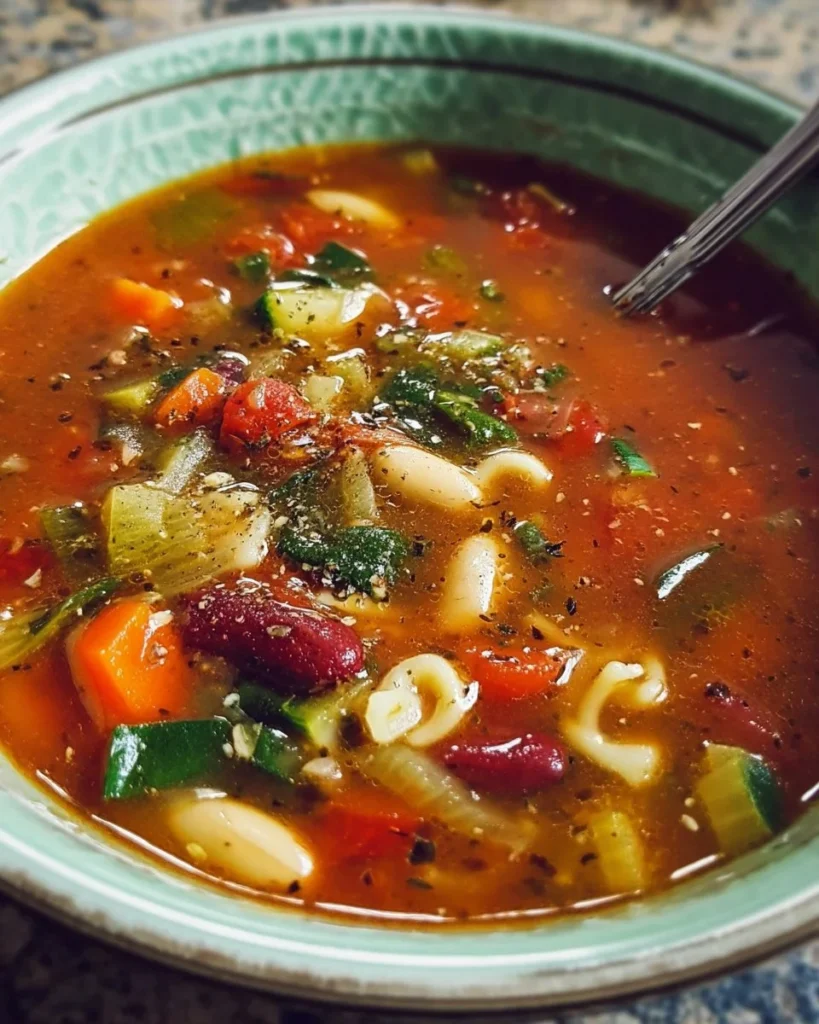
Minestrone Soup
Ingredients
Method
- Heat a large heavy-bottomed pot over medium heat and pour in the olive oil. Let the oil warm until it shimmers.
- Add the diced onion and a pinch of salt. Sauté until soft and translucent, about 5–7 minutes.
- Stir in the garlic, carrots, and celery. Cook for 4–5 minutes until the carrots begin to soften.
- Add the diced potato and zucchini, stirring to coat with oil.
- Pour in the crushed tomatoes and broth. Stir in the oregano, thyme, and bay leaf. Bring to a gentle boil, then reduce to a simmer.
- Add the drained cannellini beans and simmer for 15–20 minutes, adjusting salt and pepper as necessary.
- If adding pasta directly, do so in the last 10 minutes of simmering.
- Remove the bay leaf and stir in the chopped spinach or kale.
- Finish with lemon juice or red wine vinegar before serving.
- Ladle into bowls and top with Parmesan and basil.