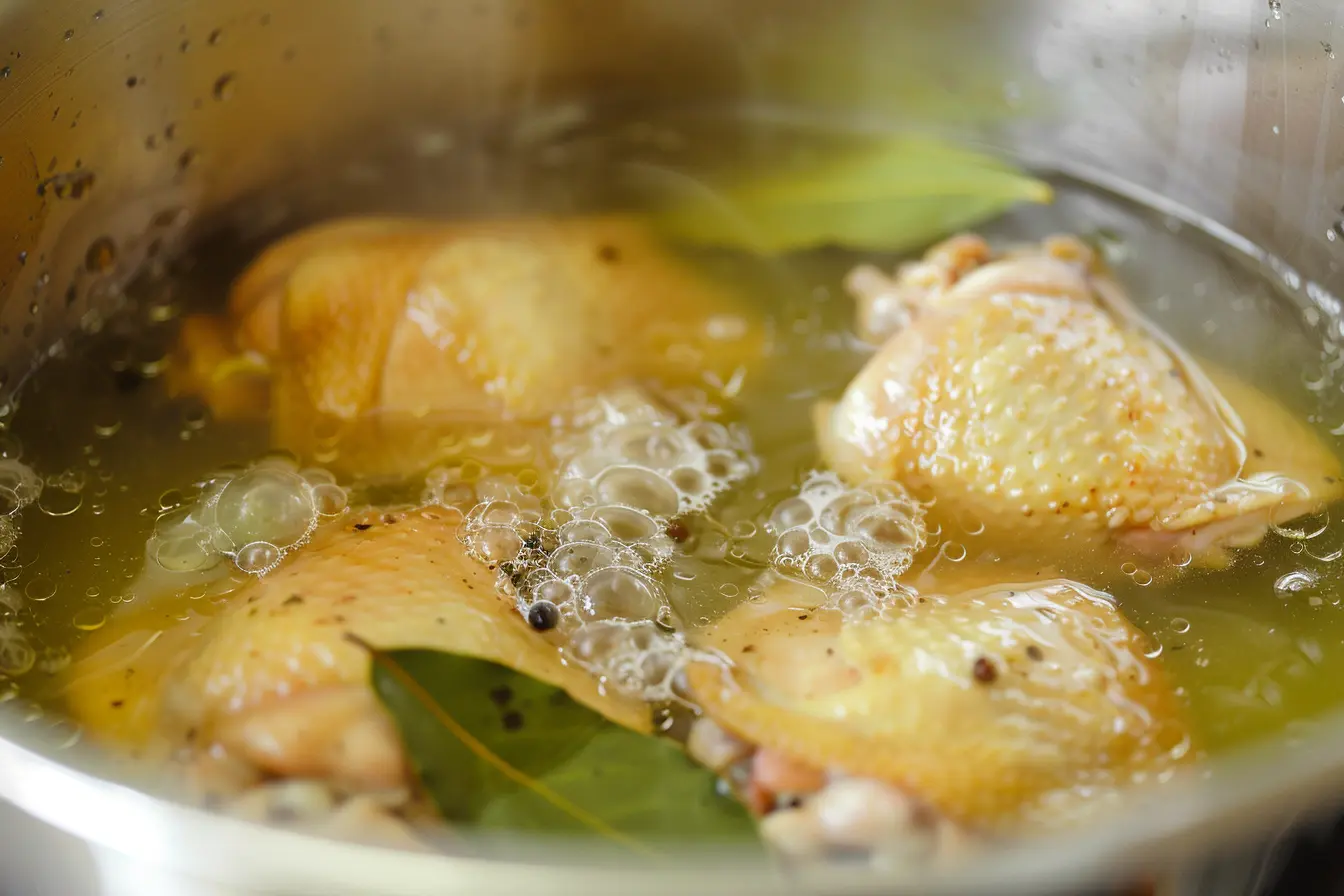
Ever wondered how to create perfectly tender, juicy chicken without firing up the grill or heating the oven? Boiled chicken thighs might just be your answer. While boiling might sound simple, it’s actually one of the most efficient ways to prepare chicken that’s moist, flavorful, and incredibly versatile. Whether you’re meal prepping for the week, whipping up a quick dinner, or looking for a healthy protein option, boiled chicken thighs deliver on all fronts.
But here’s the thing: not all boiled chicken is created equal. There’s a fine line between succulent, fall-off-the-bone chicken and rubbery, flavorless meat. In this comprehensive guide, we’ll walk through everything you need to know about boiling chicken thighs—from selecting the right cut to mastering the technique and exploring creative recipe ideas.
Why Choose Chicken Thighs Over Chicken Breasts?
Flavor and Juiciness
Let’s be honest, chicken breasts can be boring. They’re lean, sure, but they’re also prone to drying out faster than you can say “overcooked.” Chicken thighs, on the other hand, are the dark horse of the poultry world. Thanks to their higher fat content, they stay moist and tender even if you accidentally cook them a minute or two longer. The darker meat also packs more flavor, giving you that rich, savory taste that makes every bite satisfying.
Affordability
Your wallet will thank you for choosing thighs. Pound for pound, chicken thighs are typically less expensive than breasts, making them a budget-friendly option for families or anyone looking to stretch their grocery dollars. You get more bang for your buck without sacrificing quality or taste.
Versatility in Recipes
Chicken thighs are culinary chameleons. They absorb flavors beautifully and work in virtually any cuisine—Mexican, Asian, Mediterranean, you name it. Whether you’re shredding them for tacos, chopping them for salads, or adding them to pasta, boiled chicken thighs adapt to whatever dish you’re creating.
How Long to Boil Chicken Thighs
The cooking time for boiled chicken thighs depends on whether they’re bone-in or boneless. Bone-in chicken thighs should be boiled for 30-40 minutes at a gentle simmer, with average-sized thighs (5-6 ounces) typically requiring about 35 minutes. Boneless chicken thighs cook much faster, needing only 20-25 minutes of simmering time boneless, skinless thighs usually take 20-22 minutes, while boneless with skin may need 23-25 minutes. The key to perfectly cooked chicken thighs is maintaining a gentle simmer rather than a rolling boil after the water initially comes to a boil. Always check for doneness using a meat thermometer inserted into the thickest part of the thigh, which should read 165°F (74°C). If you don’t have a thermometer, cut into the thickest part to ensure the meat is completely opaque with no pink areas and the juices run clear. Starting with cold water and bringing it gradually to a boil, then immediately reducing to a simmer, ensures even cooking and tender, juicy results. Overcooking is the most common mistake once the chicken reaches 165°F, remove it from heat immediately to prevent it from becoming dry and rubbery. If you’re working with frozen chicken thighs, it’s best to thaw them completely in the refrigerator overnight before boiling, though frozen bone-in thighs can be boiled for 45-55 minutes and boneless for 30-35 minutes if necessary.
Nutritional Benefits of Chicken Thighs
Protein Content
Chicken thighs are protein powerhouses. A single serving provides approximately 26 grams of protein, which is essential for muscle building, tissue repair, and keeping you feeling full longer. If you’re active or trying to maintain a healthy diet, this protein punch is invaluable.
Essential Vitamins and Minerals
Beyond protein, chicken thighs deliver important nutrients like iron, zinc, selenium, and B vitamins—particularly B6 and B12. These vitamins support energy production, immune function, and brain health. Zinc and selenium act as antioxidants, protecting your cells from damage.
Healthy Fats
Yes, chicken thighs contain more fat than breasts, but don’t let that scare you. Much of this fat is monounsaturated and polyunsaturated—the heart-healthy kinds that support brain function and hormone production. If you’re watching your fat intake, you can always remove the skin before or after boiling.
How to Select the Best Chicken Thighs
Fresh vs. Frozen
Fresh chicken thighs are ideal if you’re cooking within a day or two of purchase. They tend to have better texture and flavor. However, frozen thighs are perfectly fine and can be more convenient. Just make sure to thaw them completely in the refrigerator before boiling to ensure even cooking.
Bone-In vs. Boneless
Bone-in thighs take longer to cook but offer more flavor since the bone adds depth to the broth. They’re also less expensive. Boneless thighs cook faster and are easier to shred or chop, making them ideal for quick meals. Your choice depends on your time constraints and flavor preferences.
Skin-On vs. Skinless
Skin-on thighs add flavor and help keep the meat moist during cooking. You can always remove the skin afterward if you’re watching calories. Skinless thighs are leaner from the start and absorb seasonings more directly, but they require careful monitoring to prevent dryness.
Preparing Chicken Thighs for Boiling
Cleaning and Trimming
Start by rinsing your chicken thighs under cold water and patting them dry with paper towels. Trim any excess fat or loose skin—you want enough fat for flavor but not so much that it makes your broth greasy. Check for any remaining bone fragments if you’re using boneless thighs.
Marinating Options
While not necessary for boiling, a quick marinade can infuse extra flavor. Try a simple mixture of olive oil, lemon juice, garlic, and herbs for 30 minutes to an hour. Even a basic salt and pepper rub works wonders. Just remember that the boiling liquid will also contribute significant flavor.
Step-by-Step Guide to Boiling Chicken Thighs
Ingredients You’ll Need
For basic boiled chicken thighs, you’ll need:
- 4-6 chicken thighs (bone-in or boneless)
- Water or chicken broth (enough to cover the chicken)
- 1-2 teaspoons salt
- 1 teaspoon black pepper
- 2-3 garlic cloves (optional)
- 1 bay leaf (optional)
- Fresh herbs like thyme or rosemary (optional)
- 1 small onion, quartered (optional)
The Boiling Process
Bringing Water to a Boil
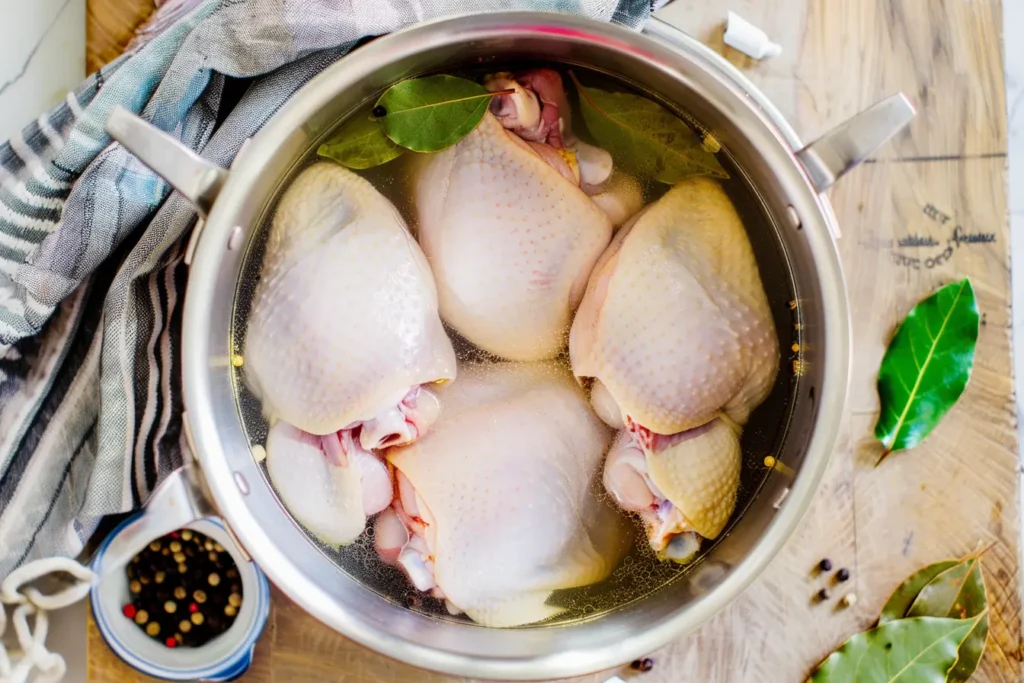
Place your chicken thighs in a large pot and add enough cold water or broth to cover them by about an inch. Add your salt, pepper, and any aromatics you’re using. Starting with cold water allows the chicken to cook more evenly. Place the pot over high heat and bring it to a rolling boil.
Cooking Time and Temperature
Once the water reaches a boil, immediately reduce the heat to low or medium-low. You want a gentle simmer, not an aggressive boil. Aggressive boiling can make the meat tough and stringy. For bone-in thighs, simmer for 30-35 minutes. Boneless, skinless thighs need only 20-25 minutes. The key is maintaining that gentle bubbling throughout.
Testing for Doneness
The safest way to check if your chicken is done is with a meat thermometer. Insert it into the thickest part of the thigh without touching bone, it should read 165°F (74°C). No thermometer? Cut into the thickest part; the juices should run clear, and the meat should be opaque throughout with no pink remaining.
Flavoring Your Boiled Chicken Thighs
Herbs and Spices
Don’t settle for bland chicken. Common herbs like parsley, thyme, rosemary, and oregano add wonderful aromatics. Spices like cumin, paprika, or coriander can give your chicken an international flair. Add these at the beginning of the boiling process for maximum flavor infusion.
Aromatics
Onions, garlic, celery, and carrots are classic aromatics that transform plain boiling water into a flavorful cooking liquid. These vegetables release their essences into the broth, which then permeates the chicken. Think of it as building flavor from the ground up.
Broth Variations
Instead of plain water, use chicken broth, vegetable broth, or even bone broth as your cooking liquid. This immediately elevates the flavor profile. You can also add a splash of white wine, soy sauce, or apple cider vinegar for complexity and depth.
Common Mistakes to Avoid When Boiling Chicken Thighs
Overcooking
It’s easy to think “longer is better,” but overcooking makes chicken dry and rubbery. Set a timer and check for doneness at the minimum cooking time. Remember, residual heat continues cooking the meat even after you remove it from the water.
Using High Heat
Boiling chicken at a rolling boil might seem efficient, but it’s actually counterproductive. High heat causes the proteins to contract rapidly, squeezing out moisture and making the meat tough. Always reduce to a simmer once the water boils.
Skipping the Seasoning
Plain water produces plain chicken. Even if you’re planning to use the chicken in a heavily seasoned dish later, starting with a well-seasoned cooking liquid makes a noticeable difference. Don’t be shy with salt, herbs, and aromatics.
Creative Ways to Use Boiled Chicken Thighs
Salads and Sandwiches
Shred or chop your boiled chicken and toss it into green salads, pasta salads, or grain bowls. It’s also perfect for chicken salad sandwiches—mix with mayo, celery, grapes, and walnuts for a classic lunch option.
Soups and Stews
Boiled chicken thighs are soup’s best friend. Add them to chicken noodle soup, tortilla soup, or Asian-inspired ramen. The meat absorbs the soup’s flavors while contributing its own richness. Plus, you can use the boiling liquid as your soup base.
Tacos and Wraps
Shredded boiled chicken is taco filling gold. Season it with cumin, chili powder, and lime juice, then pile it into tortillas with your favorite toppings. It also works beautifully in wraps, quesadillas, and burritos.
Pasta Dishes
Chop your boiled chicken and toss it with pasta, olive oil, vegetables, and Parmesan for a quick dinner. It pairs wonderfully with Alfredo sauce, pesto, or a simple garlic and olive oil preparation.
Storing and Reheating Boiled Chicken Thighs
Refrigeration Tips
Store your boiled chicken in an airtight container in the refrigerator for up to four days. Keep it in its cooking liquid if possible—this helps maintain moisture. If you’ve removed the chicken from the liquid, store them separately and you can use the broth for other recipes.
Freezing Guidelines
Boiled chicken thighs freeze exceptionally well. Let them cool completely, then place them in freezer-safe bags or containers. Remove as much air as possible to prevent freezer burn. Properly stored, they’ll maintain quality for up to three months. Label with the date so you know when to use them.
Best Reheating Methods
For refrigerated chicken, reheat gently in the microwave with a splash of water or broth to prevent drying. You can also warm it in a covered skillet over low heat. For frozen chicken, thaw overnight in the refrigerator before reheating. Never refreeze previously frozen chicken that’s been thawed.
Health Considerations
Calorie Count
A 3-ounce serving of boiled, skinless chicken thigh contains approximately 170-180 calories, with about 9 grams of fat and 22 grams of protein. If you keep the skin on, expect the calories to increase to around 210-220 per serving. For those counting macros, chicken thighs offer a balanced protein source with reasonable fat content.
Dietary Restrictions
Boiled chicken thighs are naturally gluten-free, dairy-free, and compatible with most diets including keto, paleo, and Whole30 (when prepared without added sugars or processed ingredients). They’re also suitable for low-carb diets since they contain virtually no carbohydrates.
Conclusion
Boiled chicken thighs are proof that simple cooking methods can yield delicious results. They’re economical, nutritious, and incredibly versatile—perfect for meal prep, quick dinners, or any recipe that calls for cooked chicken. By following the techniques outlined in this guide, you’ll consistently produce tender, flavorful chicken that serves as the foundation for countless meals. The secret lies in gentle simmering, proper seasoning, and not rushing the process. So next time you’re wondering what to make for dinner, reach for those chicken thighs and give boiling a try. Your taste buds—and your schedule—will thank you.
FAQs
1. Can I boil chicken thighs from frozen?
While it’s technically possible, it’s not recommended. Boiling frozen chicken results in uneven cooking—the outside may overcook while the inside remains underdone. For best results, thaw your chicken thighs completely in the refrigerator overnight before boiling. If you’re in a pinch, use the defrost setting on your microwave first.
2. How long can I keep the broth from boiled chicken thighs?
The cooking liquid makes an excellent base for soups and sauces. Store it in an airtight container in the refrigerator for up to four days, or freeze it for up to three months. Skim any fat from the surface once it cools if you prefer a leaner broth.
3. Should I remove the skin before or after boiling chicken thighs?
It depends on your preference. Leaving the skin on during boiling adds flavor and helps keep the meat moist, though it makes the broth fattier. You can easily remove it after cooking if you want the flavor benefits without the extra calories. For a leaner result from the start, remove it before boiling.
4. Why is my boiled chicken tough and rubbery?
This usually happens from boiling at too high a temperature or cooking for too long. Remember to reduce the heat to a gentle simmer after the water boils, and use a meat thermometer to avoid overcooking. Chicken should reach 165°F internally—no higher is necessary.
5. Can I use the same method for chicken breasts?
Absolutely, though you’ll need to adjust the cooking time. Boneless, skinless chicken breasts typically need only 15-18 minutes of gentle simmering since they’re leaner and cook faster. Be extra careful not to overcook them, as breasts dry out more quickly than thighs.