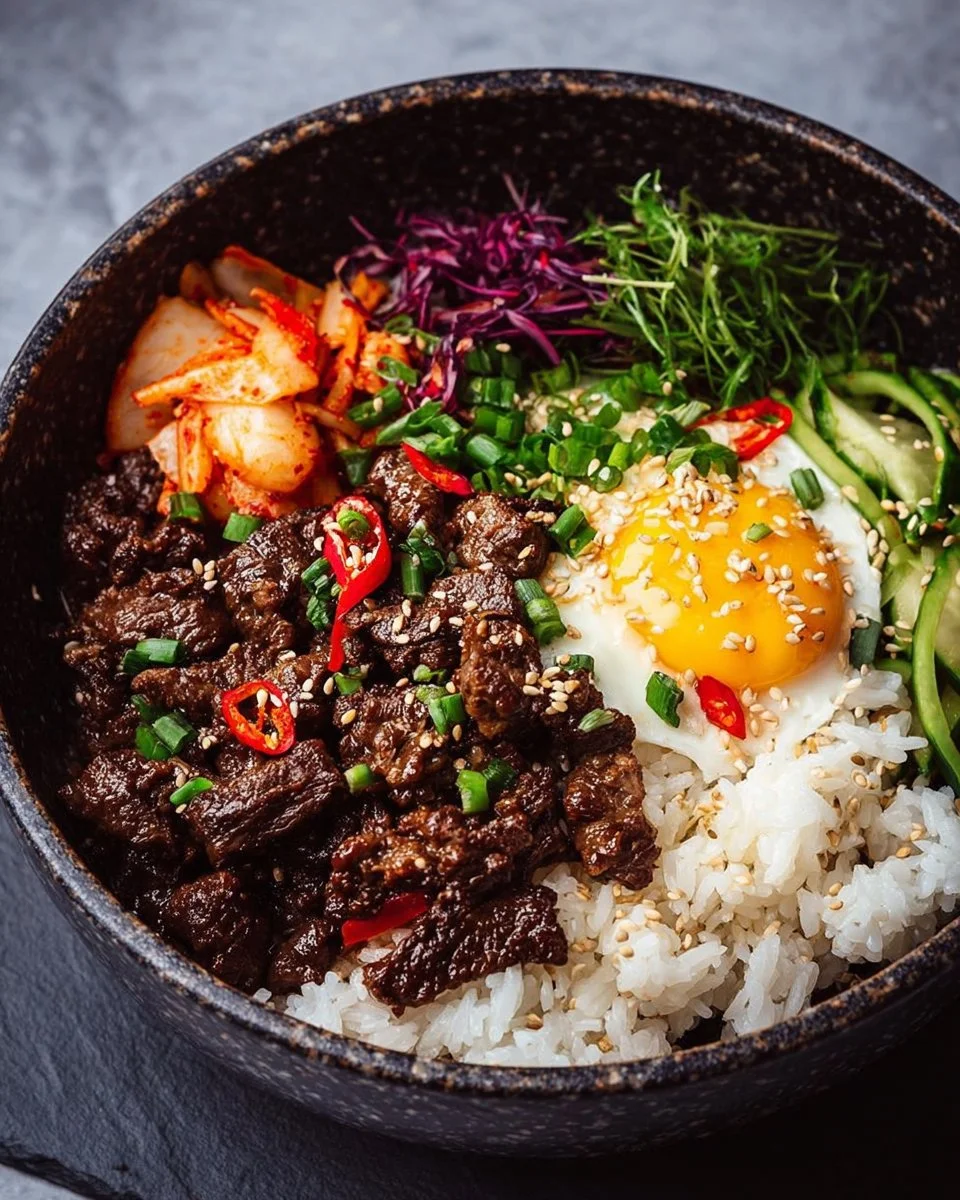
There’s something wildly comforting about a steaming bowl of rice topped with savory, slightly sweet beef that sizzles the senses and warms the heart. From the first waft of garlic and sesame to the tender, caramelized edges of the meat, this Korean Beef Bowl hits home like a cozy blanket on a rainy night. I can’t wait to share it with you — it’s fast, flavorful, and forgiving, the kind of recipe that becomes a weekly go-to.
Sometimes when I want a quick, satisfying dinner that still tastes like I cared, this is what I make. (And if you’re the kind of person who also loves beefy, cheesy comfort food, you might enjoy my spin on baked sliders as a companion recipe: Baked Beef and Cheese Sliders.)
I first learned to love this kind of Korean-style beef while visiting a friend who used to study in Seoul. She taught me how to toss simple pantry ingredients into a skillet and turn them into something utterly addictive. We ate it over mismatched bowls on her tiny apartment floor, laughing at our inability to use chopsticks properly, and I remember thinking: this is the sort of food that collects memories. Every time I make this bowl, I get a flash of those cozy, messy, joy-filled nights — and I hope it becomes part of your memory collection too!
Ingredients
- 1 1/2 pounds (700 g) ground beef (80/20 for flavor; leaner is OK but might be drier)
- 3 tablespoons soy sauce (use low-sodium if you’re watching salt)
- 2 tablespoons brown sugar (light or dark — dark gives a deeper caramel note)
- 1 tablespoon gochujang (Korean chili paste, optional for a gentle heat; omit if you prefer mild)
- 2 teaspoons sesame oil (toasted sesame oil for the best aroma)
- 3 cloves garlic, minced (don’t skip — it’s the backbone of the flavor)
- 1 teaspoon fresh ginger, grated (or 1/4 teaspoon ground ginger in a pinch)
- 1/2 teaspoon red pepper flakes (optional; add more if you like it spicy)
- 1 tablespoon rice vinegar or mirin (adds brightness)
- 2 tablespoons vegetable oil (for sautéing)
- 4–6 cups cooked short-grain white rice (or brown rice/quinoa — see tips)
- 3 green onions, thinly sliced (white and green parts separated if you like)
- 1 large carrot, julienned or shredded (for crunch and color)
- 1 cup thinly sliced cucumber or quick-pickled cucumber (optional, refreshing bite)
- 1 tablespoon sesame seeds, toasted (for garnish)
- 1 teaspoon flaky sea salt (to taste when serving)
(Notes: I like using a little gochujang for depth — just a tablespoon transforms the flavor. If you don’t have it, a touch more brown sugar and soy will still be delicious.)
How to Prepare Korean Beef Bowl
Part 1 — Preheat & Prepare the Base
- If you’re cooking rice from scratch, start it first so it’s ready and steaming when the beef is done — short-grain white rice is classic and wonderfully sticky. (If using leftover rice, loosen it with a fork and warm it gently.)
- Prep your vegetables: slice the scallions, shred the carrot, and slice or quick-pickle the cucumber. Quick-pickling: toss cucumber slices with a pinch of sugar, a splash of rice vinegar, and a few peppercorns for 10–15 minutes.
Part 2 — Make the Main Filling (the beef)
- Heat a large skillet over medium-high heat with the vegetable oil until shimmering. Add the ground beef and break it up with a spatula. Let it brown uninterrupted for 2–3 minutes to get those caramelized bits — flavor gold!
- When the beef has nice color, push it to one side and add the garlic and ginger; cook 30–45 seconds until fragrant (don’t burn the garlic!). Stir everything together.
- Pour in the soy sauce, brown sugar, gochujang (if using), rice vinegar, sesame oil, and red pepper flakes. Stir and let the sauce reduce slightly until it clings to the beef, about 2–4 minutes. Taste and adjust — more soy for salt, more sugar if you want sweeter, or a sprinkle of chili if you want heat.
- Toss in the white parts of the green onions during the last minute so they soften slightly but still keep some snap.
Part 3 — Assemble and Serve
- Fluff the rice and portion into bowls. Spoon a generous heap of the savory beef over each bowl.
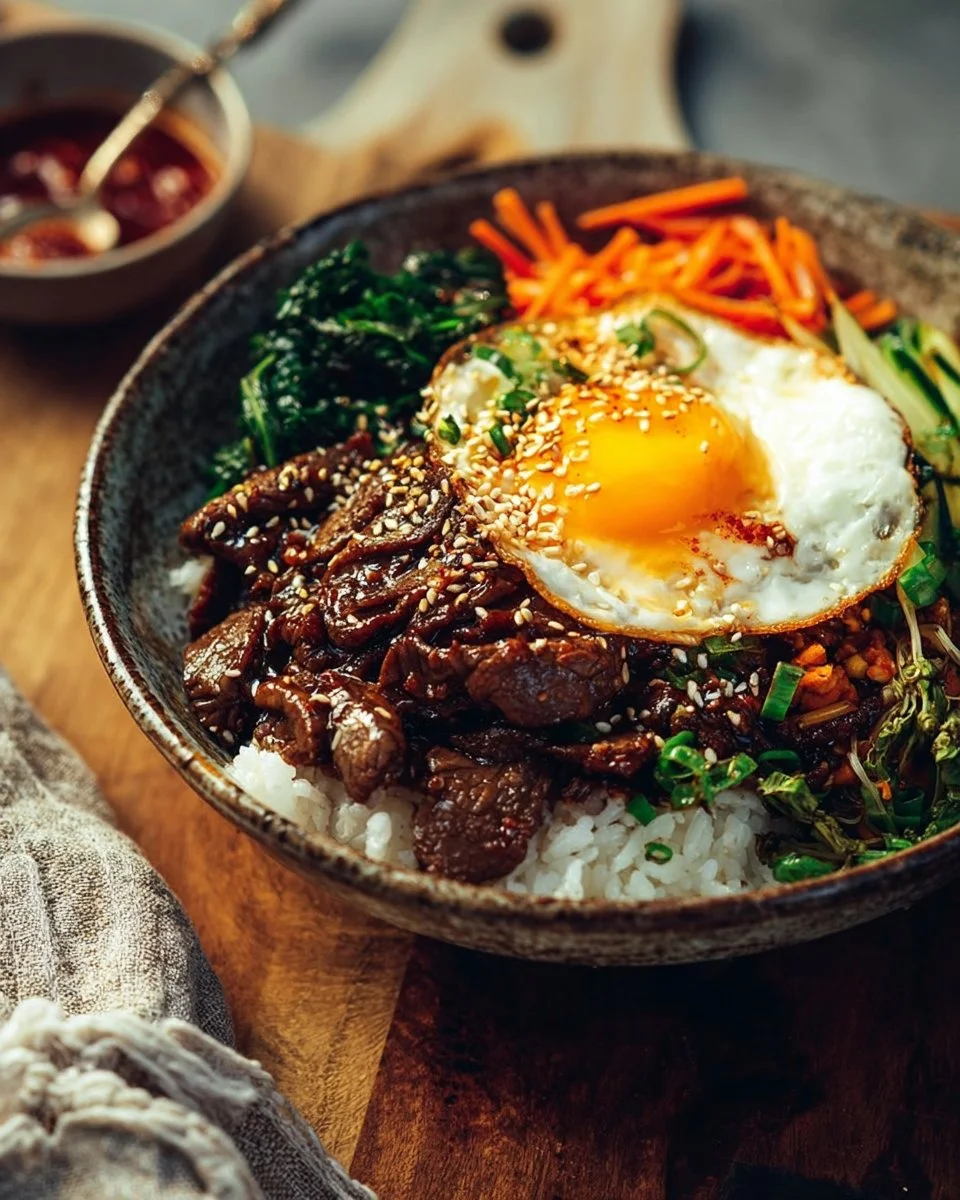
- Add shredded carrot, cucumber (or quick-pickled cucumber), and a scatter of green onion tops. Finish with toasted sesame seeds and a light crack of flaky sea salt. If you’re feeling fancy, add a fried egg on top — that runny yolk is pure silk with the beef.
- Serve immediately while hot, and watch everyone dig in!
Tips & encouragement: Don’t rush the browning — those browned bits are concentrated flavor. Taste as you go and adjust sweet, salty, or spicy, because you’re the boss of your bowl!
Why You’ll Love This Recipe
- Fast weeknight winner — ready in about 20–30 minutes from start to finish.
- Deep, layered flavor from simple pantry ingredients.
- Comforting textures: tender beef, fluffy rice, and crisp fresh veg.
- Flexible — easily doubles, freezes well for meal prep, and adapts to dietary needs.
- Crowd-pleasing — mild enough for kids but easily spiced up for adults.
- Economical — uses inexpensive ground beef but tastes far more upscale.
- Versatile toppings — eggs, kimchi, pickles, or roasted veggies all play nicely.
- Makes excellent leftovers that reheat beautifully (see storage tips).
Tips for Success
- Use a hot pan and don’t stir constantly when the beef first hits the skillet — letting it sit creates those magical caramel bits.
- Toast your sesame seeds in a dry skillet for 1–2 minutes until fragrant — it adds a nutty pop.
- If you don’t have gochujang, a mix of miso paste and a touch of chili paste can add depth.
- Drizzle toasted sesame oil at the end rather than cooking it too long — heat dulls its aroma.
- For a lighter version, swap ground turkey or finely chopped mushrooms (or a mix) — but add a little extra soy or oil for richness.
- If using frozen cooked rice, steam it with a damp paper towel over the bowl while microwaving to refresh its texture.
- Make extra sauce and toss some into quick-cooked vegetables for a full veggie side.
- When serving for guests, offer bowls of toppings (kimchi, sliced cucumbers, hot sauce) so everyone tailors their own.
Nutritional Information (estimated per serving — serves 4)
- Calories: ~520 kcal
- Protein: ~28 g
- Carbohydrates: ~52 g
- Fat: ~20 g
- Saturated Fat: ~7 g
- Fiber: ~2.5 g
- Sugar: ~9 g
- Sodium: ~820 mg (varies with soy sauce choice)
(These are estimates — swap brown rice or reduce soy to lower calories or sodium.)
FAQ — Korean Beef Bowl
Q: Can I use ground pork or turkey instead of beef?
A: Absolutely! Ground pork or turkey will work fine. Pork adds richness; turkey is leaner — add a little oil so it doesn’t dry out.
Q: What can I use instead of gochujang?
A: If you don’t have gochujang, try 1 teaspoon chili paste or sriracha plus a teaspoon of miso or extra brown sugar to mimic the fermented sweetness.
Q: Can I make this ahead for meal prep?
A: Yes — store beef and rice separately in airtight containers for up to 3 days. Reheat gently and add fresh toppings when serving for the best texture.
Q: Is there a vegetarian version?
A: Use crumbled tempeh, extra-firm tofu (pressed and browned), or a mix of mushrooms and lentils. Season the same way; you’ll still get tons of umami.
Q: What equipment do I need?
A: Just a good skillet, a spatula, and a rice cooker or pot for rice. No fancy gear required — perfect for busy nights.
Storage Instructions
- Refrigerate: Cool the beef to room temperature, then store in an airtight container in the fridge for up to 3–4 days. Keep the rice in a separate container to preserve texture.
- Freeze: The cooked beef freezes well for up to 2 months. Thaw overnight in the fridge before reheating. Avoid freezing rice if possible; cooked rice can be frozen but may change texture.
- Reheating: Reheat the beef gently in a skillet over medium-low with a splash of water or broth to loosen the sauce, 3–5 minutes. Microwave in short bursts, stirring in between, for rice and beef together. Add fresh toppings after reheating.
Serving Suggestions
- Classic: Serve with a soft fried egg on top — break the yolk and let it mingle with the beef. Heavenly.
- Pickles & Kimchi: A side of kimchi or quick-pickled cucumbers gives a bright, acidic counterpoint.
- Veg-Loaded: Add roasted broccoli, sautéed spinach, or blistered shishito peppers for more veggies.
- Fancy Touch: Sprinkle crispy shallots, toasted sesame seeds, and microgreens for texture and color.
- Drink Pairings: A cold lager or a light, fruity red wine like Beaujolais pairs nicely; for non-alcoholic, try iced barley tea or a citrusy sparkling water.
- Bowl Swap: Serve over cauliflower rice for low-carb, or on top of warm noodles (udon or ramen) for a slurpable twist!
I hope this Korean Beef Bowl becomes one of your trusted weeknight recipes — quick, soulful, and so easy to love. Happy cooking, and don’t be surprised if this ends up being the one everyone asks for again and again!